Monday, October 10, 2011

The Presence of the Future


Religion is rooted in habits of thought and action developed and maintained by generations of adherents and transmitted to each succeeding generation by formal and informal means. Although it is popular now to claim that Christianity is somehow unique in this regard, and in fact should not even be defined as a religion, our faith, like others, is based upon beliefs and practices that we did not invent but which were faithfully transmitted to us from the past. Furthermore, this was done intentionally; not only by our parents but by each generation before them, since the days of the apostles.

St. Paul certainly intended for this to happen. He pointedly instructs Timothy to train faithful teachers, capable of producing yet other teachers. That was the beginning of Christian catechism, which effectively taught the hearts and minds of believers to view the world through eyes of faith. Through the 1,500 years of history in which Holy Scripture was not available except to a handful of literate souls, this structure of instruction successfully transmitted our faith from the past and into the present.

In those centuries, one learned bits and pieces of scripture, memorized prayers, internalized the movement of corporate worship, and developed habits of piety. Thus our faith, in a manner not unlike that of other faiths, come to revere its past and to speak in hushed tones about the foundations of its spiritual life. The reverence was born of an appropriate gratitude for the priceless gifts of spirituality and civilization we had received from antiquity.

 Such reverence and gratitude is a godly response.

 I have the deepest contempt for our modern attitude toward history and tradition. We seem to expect no consequences as we foolishly keep sawing off the limb of history upon which we are sitting. Nonetheless, I assert that respect for sacred history does not make our faith unique. Hindus, Buddhists, Muslims and Sikhs also revere their histories and heroes. They too pass on to their children the habits of mind and action that they have received from the past.

The uniqueness of Christianity lies in the way it envisions the future.

Christianity does not view the past as superior to the present, nor dread a future it believes grows increasingly dark and godless.   Our faith is not propelled from a holy past into a degenerating future. It is pulled from a dark past into a holy consummation in which, at last, evil will be destroyed and redeemed humankind will become the eternal companions of God.

We do not believe that our God is in the past so that each step into the future carries us further away from His presence. No, we believe that God is in the future, continually pulling us toward Himself and each step into the future carries us toward Him. The New Testament calls that moment ahead, when we see God face to face "the eschaton," which is, for a Christian, much more significant than Eden or the origins of heaven and earth. Holy history demonstrates how, since the very beginning, the universe has been moving toward that inevitable consummation for which it was designed and toward which it was intentionally aimed. History tells us that time is God's instrument and that it performs at His bidding and on our behalf. However, it is the future that we celebrate because that is where He awaits us.

Our eyes are on the eschaton because the golden age is before us, not behind us.

In Christ, sacred future made its first bright appearance. In Him, the future state of the universe (and the future state of all who belong to Him) became visible and tangible.  In him, the past, even the holy past of our faith, found its purpose and explanation.

Two lines from a beloved Christmas carol sums up the essentials of Christian eschatology:

"Long lay the world in sin and error pinning, till He appeared and the soul felt its worth.
A thrill of hope, a weary world rejoices, for yonder breaks a new and glorious morn."

Full steam ahead!

Why then all this anxiety and fear among Christians? Why all the angst about our lost past and the deplorable nature of the present? Why all the fear about the anti-Christ, and obsession with our evil and powerful enemies?

What are we to do about this foolish Christian pessimism, through which our ancient past is judged as insignificant, the future viewed as a source of unbearable anxiety, but our recent past -- especially the decades just preceding our birth -- some sort of golden age of faith and spiritual life?

Have we lost the bright light of the eschaton? Have we forgotten the moment towards which we travel and for which our ancestors so diligently prepared us?

For anyone who has fixed his eyes upon the eschaton, the future is not dark. A beacon shines from a place just beyond our years. In its light, the shadows of our present are undone and the mysteries of the past are fully illuminated.

Saturday, October 1, 2011

Crisis


A crisis is a fork in the road of life. It is a place of decision; an inescapable shift in one’s direction. Most of us do not like such moments. We would much rather maintain the leisurely pace of habit and routine.  We would like to keep doing what we’ve been doing. Be who we’ve been. Believe what we have believed.

Crisis requires a reevaluation of things we would rather just take for granted.

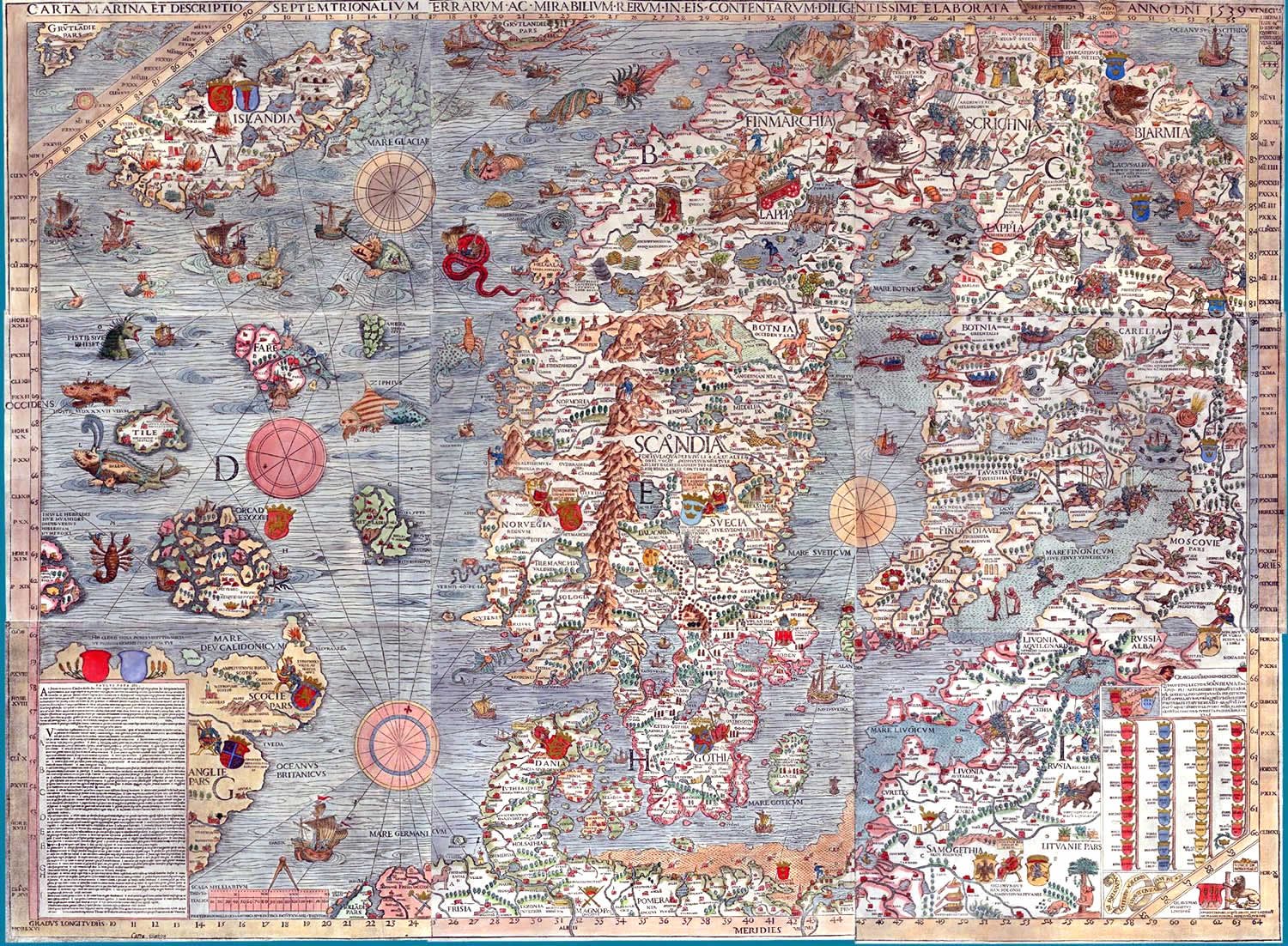
A medieval peasant for example, did not question his piety or his view of reality. He lived life and approached death with the security that “as it was from the beginning, is now and shall ever be, world without end.” He knew that the world ended somewhere beyond the straits of Gibraltar, and that somewhere beyond lay the boundaries of human habitation. Great dragons and monsters guarded that boundary and terrorized those foolish enough to venture toward the edge. He knew that there were four corners of the earth. The sun and moon rotated around the planet to give humankind light and heat. The stars sprinkled the skies to help us navigate the seas and, could, if properly studied, give directions about whom to marry or when the hour of death would come.

Then Copernicus and Columbus shattered the way the world worked.  They shook the foundations of Europe’s faith. After them, how could a man still believe that the sun once stood still in the valley of Ajelon and gave Joshua more time to win the victory over his enemies? How could one still believe that the sun runs his daily course across the heavens like a bridegroom processing to his wedding?

Well, most peasants just dismissed the news about a round earth and the discovery that we inhabit a heliocentric solar system. So if pressed, they responded to such information with amusement, indifference or anger. Why not? There were crops to plant. There were babies to conceive. There were old people to bury. Abstract intellectual ranting in big cities was not worth the normal person’s concerns.

That’s why phrases like “the setting of the sun,” and “the ends of the earth,” survived, even to our own times.  Common people ignored the implications of important discoveries for a very long time.

So, in time the old phrases became poetic forms of speech.  Gradually, the knowledge sank in and the words shifted their meaning. People who still believe in a flat earth now become wards of the state and are forced to wear funny jackets.

The crisis in cosmology that ended the medieval world, and turned the word “sunset” from a description about reality into a poetic metaphor, took centuries.

We don’t get centuries to process our intellectual revolutions. Since 1901, we have absorbed the equivalent of a Copernican revolution every five years:  the theory of relativity, quantum mechanics, continental drift, the double helix, the digitalization of records, translation software that promises to make all data accumulated in all times and in all places available to all in their own tongue - need I go on?  

We simply have not absorbed what all this means. However, we will not have the luxury of living as though the world is the same as it was in 1880.

In one sense, we haven’t done that, of course. For many generations now we have been using nifty new gadgets produced by all these discoveries. The point it though, we have been doing our best to ignore the radically different view of reality that these discoveries have made possible.  Nonetheless, the world has been shifting as we have fought our wars, made our money, raised our children, and yes, said our prayers.

Now the explosions of new information have become impossible to ignore, even at the popular level. All sorts of global crises in a number of fields are forcing us to the crossroads. Furthermore, by the time we adjust, new pieces of information make our adjustment obsolete. We find ourselves required to adjust again.

We are just not built for this. It is like constructing a house in an earthquake.

So, if our faith is in a system, dogma or protocol; we are going to treat new information like sea monsters. Our terror will grow. Our rage will increase. Our grip on sanity will become ever more tenuous. The center will give way.

As we approach the crossroads, we will decide to take the right fork, only to encounter another crossroads. We’ll stumble through that one and find ourselves facing yet another. At each turn, we will only be able to guess about where to turn because we have no maps for this new territory.

What we do have though is a friend who knows the way.

It was a Person who guided our ancestors across the horror of their collapsed system of medieval thought. That person delivered our ancestors safely into the modern age. That is why it is difficult for us to understand why the changes were so excruciating for them. We are so adjusted to modern thought that the medieval systems of thought, so carefully constructed on a foundation of faith, seem to us bizarre and alien. The crisis forced a new way of thinking about the world and about faith. Yet, we do not experience that shift as a loss of faith, although our ancestors certainly did at first.

The same Person is with us that was with our ancestors. Of course, he does not override our idolatrous obsession with systems and protocol. So if we refuse to trust Him, we may miss the turn, all the while clutching our terrors and mumbling our clichés and slogans. 

These are times that try men’s souls. The crisis is painful and disorienting.

The crisis is also unavoidable.

Our old world is not coming back.

Unfortunately, many of our maps are inaccurate.  They describe the territory of that old world, like those maps everyone loves with the sea monsters at the edge of the earth.

Since we don’t have a map, we need to listen carefully to our Helper.

Otherwise, we will have to wrestle with the monsters, even if they are not really there.

We will not win that fight because we will be fighting our own heads.

There is only one way through this crisis: we must cling to the Christ.

Image of a DNA helix

Thursday, September 22, 2011

What Do We Need From Church?


           I called my last blog “a snapshot. ” Like a snapshot, it expressed the frustrations and questions of a single moment of my life. Photographers will tell you that a snapshot often reveals more than film. However, it also expresses less. 

I have heard from a several pastors. They say that my blog expressed their experience: that the way they understand church work and pastoral leadership seems increasingly at odds with that of many of the people they serve. 

Of course, many –perhaps even most -- pastors begin their career with a romantic view of both the church and pastoral ministry. Our idealism is akin to our courtship with a person. It’s not entirely wrong. It is a kind of whitewash that momentarily covers up the blemishes and faults of the one with whom we have just “fallen in love.” Marriage quickly dispels those illusions.  We then get on with learning how to love when not intoxicated by the heady hormonal cocktail of romance. We may also seek to rekindle the high that comes from romantic enthrallment by flirting with someone else, or even by having a full-blown affair.

How we are personally wired has a lot to do with how we handle fallen reality.  Our ideology also has a lot to do with it.

There are those who expect little from marriage and who are thus able to adjust to a life partnership that is little more than a contractual agreement to stay together to raise children and share chores.

There are those who keep trying to take the relationship deeper and make of it an inner penetration of souls. 

Our satisfactions with life and relationships have much to do with our expectations.

The Buddha famously taught that our desires and expectations are the cause of our pain. In that case, if we surrender them the pain will also disappear.

The problem with that is that Christian faith teaches that we ought to expect and seek transformation of our character. The Bible doesn’t teach that we will follow Christ and be forgiven of our sins and then go to heaven but that in this life we will pretty much remain as we are. We are called to be a different kind of people, and to be different now.

Furthermore, our faith teaches us that worship is a transcendent meeting with the living Christ; “tasting the powers of the world to come,” as the writer to the Hebrews puts it.

Evangelism is the sharing of good news, through word and deed (and through the demonstration of a changed life.)

The transformation of souls is the result of hearing the Word, internalizing the word, living out the word within community, acting out the word among unbelievers, and sustaining this process of life-transformation by a continual worship of God in which the soul is reawakened and reoriented by grace.  

If this is true, then the role of the pastor is to study the word, proclaim the work, model the word, and create worship opportunities for the community he services to meet the risen Christ. 

There is no pastor alive who is not aware of his inadequacies when it comes to this high calling. Nonetheless, pastors are expected to accept this calling and to then work through our immaturity, insecurity, faults, pride, and all that hinders our own spiritual journey. Before the community we serve we must become “living epistles, known and read by all.”

If we don’t care whether or not others (or we ourselves) grow in God, our task is easier. We can just grow our church, collect our money and mind our own business. The role of the pastor is simple in this case: manage the stuff and keep the nickels and noses in the pews. 

If we do care, we will realize that we are both responsible to keep the noses and nickels in the pews and to grow the people in God. And, we must discover, train and release new leaders. And, we must settle disputes. And, we must be there when people die, divorce and go bankrupt. And, we must remain cheerful and energetic Sunday mornings as we preach – or during the week when we blog.  We must listen as those who believe that the earth is only 6,000 years old tell us that any other view is rank heresy. On the other hand, we must resist what the Bible calls “damnable heresies.”  However, we must do all of this with grace and tenderness. And, of course, we must know how to manage money and people well. Otherwise, our Bible teaching will fall flat.

No one can do all of these things. That is why a pastor must grow – or allow others to grow – a system of people equipped to do the things he is not gifted to do. However, as he delegates, he cannot appear to be aloof and unavailable. Nor can he allow the church to appear institutional and cold. The result of delegation must be an organic body rather than a cold machine.

A few years ago, most people remained a part of a single church for most of their lives. They squabbled and fussed in that church. They loved and lived there. They died there and were buried out back. If the church had some issues, they weathered those issues.  Sooner or later they found a solution. After all, it was their church. The pastor could preach a few bad sermons, make some mistakes and gradually grow in God before the people.  He was the father of a family rather than the CEO of a corporation.

In the new church consumer environment, churches compete for people and money just like any business enterprise. Pastors learn to market, take polls, create events and produce programs that will attract people and keep them coming.

I don’t know how pastors can escape sometimes struggling with the thought: “is any of this really about meeting God? “

Well, the truth is: a lot of it is not about meeting God. But people meet God anyway, in spite of all the frantic distractions of modern church work. And gradually, a pastor must decide to locate that place where God is at work within his congregation and lovingly ignore all the voices that would distract him from his real calling – from those responsibilities for which he will give an account to the Lord at the day of judgment. He must then accept the consequences of his choice, knowing full well that he is going to make some bad calls along the way.

The truth is, there is a lot of people who could care less about the Christian crowd that churches are competing over. The people on the edge – those with serious questions, those that hurt, those that come from places where Christ is unknown, those who are addicted, and those whose souls cannot be satisfied with good lights, good sound, great programs and a comfortable seat.  Those who hunger to meet God and be transformed by Him will always want a church where these things remain a priority.

Pastors who really want that should stop whining and just get on with it.

And if the camera takes their picture on a difficult day?

Well, it just does.

That’s what snapshots do.