Wednesday, April 25, 2012

Bad Religion? : The Chasing Francis Series


        Today, I found a book I read in 1993,  The Summa of the Summa. It is a brief summary (consisting of merely 532 pages!) of the most famous work of the great theologian, Thomas Aquinas. Peter Kreeft prepared the summary and his notes are a vitally important part of it. If one reads this book with Timothy McDermott’s paraphrase of the Summa, he may begin to understand Thomas Aquinas’s mind.
                
          I picked that old book up today because I realized that Thomas Aquinas may be  another Italian lurking in the shadows of Chasing Francis. I’ll tell you why in a moment. First, I’ll share what I wrote nearly twenty years ago about Kreeft’s book:

“The central issue in any discussion about Christianity involves deciding whether it is true. Most people understand that believers find faith comforting. The question is whether it is true. Aquinas’s common sense test for determining whether we know the truth about something is to learn whether the thoughts in our heads about it correspond with reality. This is a vital test, because Christianity cannot be comforting if it is not true. If it is not true, it is a form of madness. For mature adults to order their lives around some ‘universal end’ or ‘in hope of the general resurrection from the dead’ is a willful delusion of self if none of these things are true. In that case, Christianity exists to maintain an intellectual dysfunction we need to outgrow. I enjoy the likes of Robert Schuller and his message of positive affirmation. However, his success is based on a strategic and thus deliberate avoidance of the uncomfortable question every intellectually honest person must ask of the ideology he embraces: ‘is this based upon something real?’ If it is not, Schuller and Christianity’s other inspiring speakers are making a living inspiring people with amusing speeches about nothing. That even Christians have become uninterested in asking tough questions about what is real reveals that believers have been silently concluding that Christianity will cease to comfort us if we ask it or its defenders serious questions. We are afraid to accept the answers. So we have come to accept a version of our faith that is superficial, insipid, intellectually vacuous and ultimately meaningless. Either that, or we are slothful about being transformed by the renewing of our minds. In either case, popular Christianity has become, as our critics claim, a sort of mild morphine we embrace for no greater reason than that we find it comforting.”  

Why would Aquinas, one of Christianity’s most passionate defenders, provoke such a response? 

I won’t bore you with my reflections on what I have learned trying to read Aquinas. He was Italian. He was born in 1225 into a family known more for producing military officers than saints. However, he was drawn to his uncle’s way of life, who was an abbot. And, he utterly reordered European thought.

In many ways, we could say that Reformed theology was a reaction to some of his ideas. At the same time, his work helped form the intellects of the very reformers who challenged him. Behind both Aquinas and the reformers was Augustine, but that is a theme for another day! What I want to make clear about Aquinas in this blog is that people still study him; not only for his theology but for the philosophical structures he developed. He remains formidable, even after one discounts the limitations of his medieval understanding of science. He believed Christianity was true and his reasons for thinking this still shakes the foundations of secularism.

Not many Christian leaders, Protestant or Catholic, wrestle with the likes of Aquinas now. We study trends, demographics and management theories. We argue politics. We do fund drives. Then, one day, we ask ourselves why we are doing all of that. The malnourishment of our soul erodes the energy to keep it up.

The elders of the church in Chasing Francis thought their pastor was losing his faith. What was actually happening was that he was recovering his faith. What he was losing was faith in a form of Christianity American believers have found increasingly attractive, but which only superficially resembles any form of the faith embraced and confessed by past generations.

Whether Eastern Orthodox, Roman Catholic or Protestant, Christians throughout history have offered a robust structure of thought that one could examine, debate, and if he accepted it, embrace. In place of these structures of thought, lifestyle and spiritual formation, we have been steadily remolding our faith into a market-driven product for consumers. As a result, many of us are only marginally interested in whether those who preach Christianity actually live it. We are not at all interested in studying it ‘when we rise up and when we lie down’. We are downright hostile to the idea that Christianity might more important than our money, our chosen way of life, or even life itself. The faith is peripheral rather than central to our lives, and this shift mutates the faith into something historically unrecognizable.

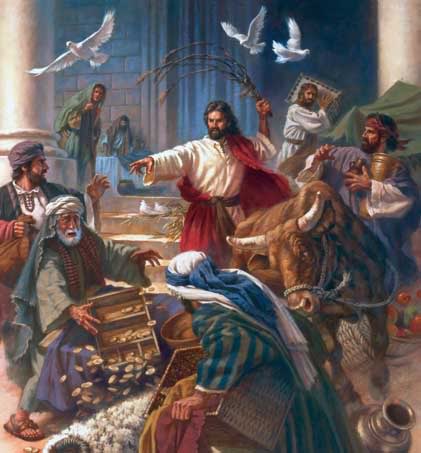
This pastor in Chasing Francis discovered he could no longer sustain the ever-maddening competition for America’s diminishing Evangelical population. He was tired of clichés, silliness, masking political commentary with a religious veneer and turning the house of God into a flea market.

Were John Calvin, Thomas Aquinas, John Wesley, Augustine of Hippo, Martin Luther, and Jonathan Edwards to enter one of our market-driven churches, they would find plenty to disagree about among themselves. But all of them would be horrified to discover that the people on our pews no longer know what Christianity teaches. They would be more horrified to learn that many of our preachers do not know what Christianity teaches. But they would not even begin to comprehend that our loss of biblical, theological and intellectual formation has been a deliberate part of a strategy to attract religious consumers into the church.

If schools granted medical degrees to people whose real specialty was business administration, marketing or entertainment, there would be a public outcry. We know it may be possible to amuse a cancer patient, become his personal friend, and make his hospital experience pleasant without ever curing his disease. A hospital that operates by such priorities might teach us there are things we can do to make a patient’s experience more comforting and that would be profitable for everyone. However, we would think it grossly unjust for doctors to stop treating disease in order to be liked, or worse, in order to gain more patients.
            
       The elders of the church in Casing Francis were horrified when their pastor realized he was doing precisely this – pandering to religious consumerism while neglecting the people’s eternal needs. What the elders could not grasp is that their pastor had awakened from a spiritual stupor. He wasn’t going crazy. He was becoming a disciple.
               
      I read a book review this morning on the Amazon site. It is about a new book on the state of American Christianity and is called Bad Religion. I have not read it.  For all I know, I may I disagree with every word in it. I just know I deeply resonate with the review. So I end my blog by passing it along to you. I believe it deserves our careful consideration. 

“As the youngest-ever op-ed columnist for the New York Times, Ross Douthat has emerged as one of the most provocative and influential voices of his generation. In Bad Religion he offers a masterful and hard-hitting account of how American Christianity has gone off the rails—and why it threatens to take American society with it.

Writing for an era dominated by recession, gridlock, and fears of American decline, Douthat exposes the spiritual roots of the nation’s political and economic crises. He argues that America’s problem isn’t too much religion, as a growing chorus of atheists have argued; nor is it an intolerant secularism, as many on the Christian right believe. Rather, it’s bad religion: the slow-motion collapse of traditional faith and the rise of a variety of pseudo-Christianities that stroke our egos, indulge our follies, and encourage our worst impulses.

These faiths speak from many pulpits—conservative and liberal, political and pop cultural, traditionally religious and fashionably “spiritual”—and many of their preachers claim a Christian warrant. But they are increasingly offering distortions of traditional Christianity—not the real thing. Christianity’s place in American life has increasingly been taken over, not by atheism, Douthat argues, but by heresy: debased versions of Christian faith that breed hubris, greed, and self-absorption.

In a story that moves from the 1950s to the age of Obama, he brilliantly charts institutional Christianity’s decline from a vigorous, mainstream, and bipartisan faith—which acted as a “vital center” and the moral force behind the civil rights movement—through the culture wars of the 1960s and 1970s to the polarizing debates of the present day. Ranging from Glenn Beck to Barack Obama, Eat Pray Love to Joel Osteen, and Oprah Winfrey to The Da Vinci Code, Douthat explores how the prosperity gospel’s mantra of “pray and grow rich,” a cult of self-esteem that reduces God to a life coach, and the warring political religions of left and right have crippled the country’s ability to confront our most pressing challenges and accelerated American decline.

His urgent call for a revival of traditional Christianity is sure to generate controversy, and it will be vital reading for all those concerned about the imperiled American future.”

This is what the pastor in Chasing Francis discovered. Christianity is not only a communal experience and a weekly comfort. It is a structure of thought. It is a system of belief that must be deliberately taught, learned and adopted. If Christianity no longer offers this, then many now wonder if it offers much of anything; except, perhaps, a living for those of us who market it.

Monday, April 16, 2012

Was Jesus a Pacifist? : Chasing Francis Series


In Chasing Francis, a Rwandan nun lectures a confused pastor about what it means to be a peacemaker. She insists that a peacekeeper is not the same thing as a peacemaker.

A peacekeeper, she says, avoids intervening in things that upset others. He accepts things as he finds them. He doesn’t say or do anything that might challenge his world because he longs above all for a type of ‘peace’ called security. This ‘peace’ leaves him spiritually undeveloped. It may even lead him to become evil if security requires him to turn a blind eye to injustice.

A peacemaker, in contrast, works to bring God’s shalom into his world. Ultimate shalom is a whole person flourishing within a whole society through a living relationship with a holy God. Because we live in a fallen word, we will not fully experience that state until the Prince of Shalom comes to establish it. Until then, the people of God work to bring about states of relative justice and righteousness in a world that is controlled by forces that resist shalom. Because this work challenges the status quo of the societies in which they live, peacemakers often experience pressure, persecution, and even martyrdom.

For all these reasons, a peacemaker may suffer, not in spite of, but because he is a disciple of Jesus.

What the peacemaker must not do is use violence in the name of Christ, even in order to create a good society. The popular way of expressing this truth is “the ends do not justify the means.” The reason this statement is true is because the means we employ always shapes the end we achieve. As the New Testament puts it, “the wrath of men does not work the righteousness of God.”


When a Christian uses violence in order to achieve “righteous” aims, he opens himself to the forces of darkness. This happened in the crusades. It happened in the subjugation of the Incas and Aztecs. It happened under apartheid in South Africa. It happened through the many European persecutions of Jews by Roman Catholics and Protestants. It happened when Americans enslaved Africans. It happened during the near genocide of native peoples on this continent.

In all these cases, Christians justified the use of violence because they claimed they were establishing Christian societies. In retrospect, we understand that these moments were incompatible with the teachings of Jesus. Then again, evil is always easier to identify by those standing outside of the societies gripped by it. It is much harder to spot when we are inside such societies.

Evil is especially successful at covering its tracks from those who seem to benefit from its work. Most of the time, the ones who first become aware of evil within their society are those who immediately suffer because of it.  However, their reactions to evil may contribute to its power. Evil actions encourage evil reactions. Those reactions often provoke yet new reactions.

Jesus calls us to destroy this cycle by warning us against resisting evil. He knew that a resistance to evil easily becomes another form of evil.

Therefore, when a Christian advocates the use of force to bring about a righteous end, he must utterly ignore The Sermon on the Mount. He replaces obeying Jesus with praising Jesus. Unfortunately, this is all too common.

The main place Christians face this temptation is not at the national or global level. We can easily voice our passionate opinions about the people and issues at those levels because they are too far away for our opinions to make any practical difference. No, it is nearly always in our everyday lives where our choices to speak or to act make real differences and invite real consequences. It is in our families, communities, and churches where we are called upon to become peacemakers. It is in our everyday world that we lovingly speak and act the truth, without coercion; without threats. 

We are often tempted to use some form of power to maintain our security instead of speaking or acting against injustice. Manipulation,gossip, withholding good from someone, raising an eyebrow, and sighing are ways of communication that allow us to cover our tracks. They are forms of falsehood and are, therefore, often evil. They seem small but they result in violence.

Jesus calls us instead to openly speak the truth, as we understand it. We must give people an opportunity to consider our words; so that those who hear us can make a decision free of coercion. They may reject our words. They may even become our enemies. Even so, we must speak without malice. We must act without coercion. We must speak and act whatever the cost because we are Kingdom people.

Sometimes, a type of limited force must be used to protect those who cannot protect themselves. Whenever possible, an officer of the law should do this. He or she is appointed by the state and, according to the scripture, by God Himself. Private citizens, however, should not, unless protecting the lives of those for whom they have responsibility. Private Christian citizens therefore do not need bazookas and Uzis. The desire to own such weapons is connected to our culture’s preoccupation with violence. It is difficult to understand why a follower of Jesus would have the slightest desire to associate with such destructive force, created as it was for the express purpose of maiming and killing other human beings.


We live in a fallen world. A Christian who speaks about justice and righteousness and who attempts to live out what he believes may suffer from the hands of violent people. And make no mistake; guns are not the only means of acting violently. A viral email can do extreme damage to a person’s reputation or dignity. Indeed, the victim of such an email might well prefer that the writer simply shoot him instead. Old fashioned person-to-person gossip falls in the same category. We have little control over such reactions. When one speaks truth, however kindly and wisely, he may suffer for it. However, if he is a Christian, he must not retaliate.


That is apparently what the Lord asks of us. But is it humanly possible? And if it it is not, do we dare edit Jesus’ words or simply ignore them so that we can keep up the appearances of a culturally acceptable religion we call Christianity? Just because we call it Christianity, will it really be Christian?

The tile of my blog asks whether Jesus was a pacifist. I do not know the answer.

Jesus said that he had not come to bring peace to the earth but rather a sword. He said he would turn father against child and daughter against mother. So what are we to think? Does a pacifist claim to bring a sword to the earth?


When we fail to speak and act, are we participating in the "peace" Jesus said he did not come to bring? On the other hand, he did say once he would give us peace, but not as the world gives. So are there different kinds of peace?


Does Jesus not intend to contrast the sort of “peace” that comes through our collusion with the status quo with His Shalom, which comes only through trusting in His ways of God and living accordingly? 


None of us want to be cast out, despised, or ridiculed. We prefer to be powerful, wealthy and honored. Sometimes faithful believers get to be all of that. Usually, however, they don’t. Whether they do or not, they are always obligated to do all they can to speak and live the truth in order to spread God’s shalom. They must do this whatever the cost.

In Chasing Francis, the cost seemed to be astronomically high to the struggling pastor. It threatened the loss of his friends, reputation and financial security. But the cost of a soul, which the Lord once insisted was worth more than the entire world, cannot be measured. That was what was really at stake for this pastor, and for all of us. Will we trade our soul for security, or for human favor, or will will risk all to bring our soul and the parts of the world influenced by our soul, into harmony with God?  


“Blessed are the peacemakers for they shall be called the children of God,” Jesus said.

Perhaps these are the words of an idealistic prophet, a man we love but do not intend to follow. Then again, they may be the preamble of a constitution meant to govern the heavens and the earth.


Friday, April 13, 2012

The Dirt on St. Francis: Chasing Francis Series


Kevin Guenther is a man in our church who won’t stop talking about dirt. He is obsessed with tomatoes and turnips. And bees, by the way! He thinks gardening is a sacrament.

If you see him, run for your life. If you don’t, you may soon hear a speech about healing your soul by digging in dirt. Soon, you may find yourself in a discussion about compost.

Kevin talks people into raising chickens and rabbits, even if they live in a city.

I have been watching the people involved with him passing around cheese and eggs. Just today I found a hunk of cheese in my office. He denies any connection to the cheese but no one in our church had ever passed cheese around before he came.

What’s up with this guy?

Well, he believes that when Christians lose their connection with nature, they lose a part of their faith. Their understanding of God begins to get distorted. People start thinking that meat is created in the backroom at Kroger; carrots come into the world in little pieces wrapped in cellophane. After a while, it gets difficult to thank God for our food. You begin to wonder what God actually had to do with it.

So, Kevin leads people to the dirt and teaches them to grow their own food. He even invented a contraption called Farm Garden in a Box. A person can use it to grow food on the balcony of a high-rise, if he so desires.

He teaches us to “dress, till and cultivate the earth,” because he believes we can meet God there.

In Chasing Francis, a confused pastor goes off to Italy. He meanders around the vineyards outside Milan. He goes to Rome and Assisi. He eats good food.  He then returns home with a new lease on life and faith.

Crone, the author of Chasing Francis, seems to think the pastor found his way because of the work of Francis of Assisi. Kevin’s theology indicated it might have been the garlic, olives and wine. The pastor may have been transformed by eating naturally grown vegetables.

Maybe there is a third option. Perhaps the pastor was healed because he returned to a culture in which one eats and talks with people who work in the dirt, a culture such as we once were.

How many times did the Lord say, “the kingdom of God is like this farmer who …” Jesus must have told those stories because the spiritual world operates very similarly to the natural world. That would certainly make sense if the same creator designed both the natural and spiritual parts of the universe. We actually confess that in the creed, “I believe in God the Father Almighty, creator of all things, visible and invisible.”

Kevin thinks that one can learn how the invisible part of the universe works by becoming familiar with the visible part. Getting tomatoes at Kroger won’t do that for you. Growing tomatoes in your back yard just may.

Oh, and did you know that “Adam” means “soil?” We are made of that stuff. We return to that stuff. Our nourishment comes from it.

So our faith can be explained in three movements:

The Garden
The Kitchen, and
The Table.

An old communion prayer sums it up.

We thank you, Lord God, King of the Universe, for this bread and this wine, which you have created and human hands have prepared. They shall be for us, the body and blood of Christ.

People like Kevin remind us that the source of human life is earthy, common and precious. He helps us move beyond the plastic and artificial not because they are evil, but because they are insufficient instruments to nourish life.

Kevin takes a handful of dirt and tells us how to prepare it to feed ourselves.

So if you can’t go to Italy, take a trip to the field behind our church! Kevin has plowed up some land back there that might have made a perfectly good parking lot. He filled it with boxes. He filled the boxes with soil and seeds.

Kevin isn’t exactly St. Francis of Assisi. However, he is willing to go out into the field and talk about birds and rutabagas.  And, along the way, a few souls are gathering around him; getting steadily pulled out of a world of tomatoes that taste like plastic and into a lifestyle that celebrates “all creatures of our God and King.”

I’m not a Kevin groupie yet. But after meeting him, I do sing This is My Father’s Word with a lot more gusto than before.

This message was surely approved by Francis of Assisi!